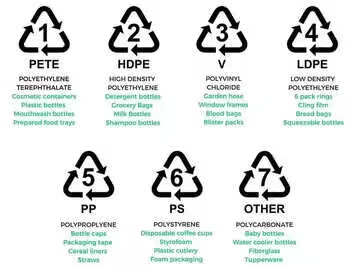
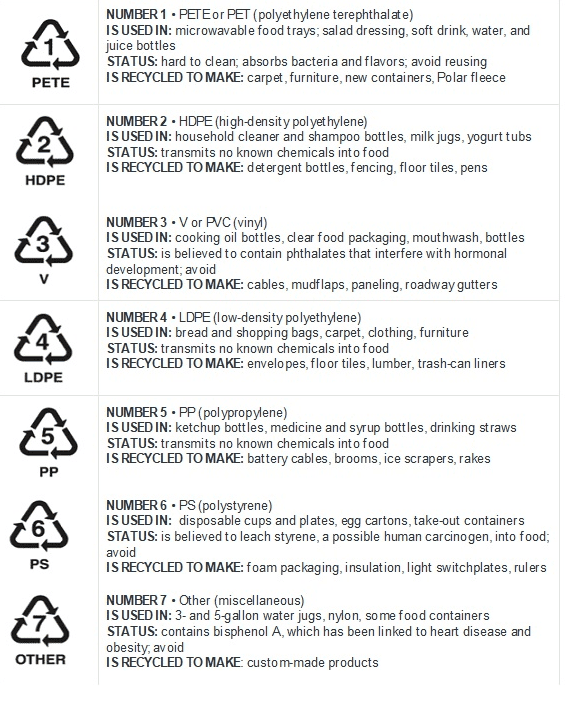
We might have a hard time reading all the tiny numbers on the sides of plastic jugs, bottles, and other containers.
Bisphenol A (BPA), a colourless solid, is soluble in most organic solvents for its production in plastics. It is not soluble in water.
Through an industrial condensation reaction, phenol and acetone are combined to form BPA.
Plastic Recycling Symbol #1: PET or PETE
One of the most popular and readily recyclable forms of plastic is this one.
Single-use drink bottles, such as those for soda, water, etc., are made of PET (polyethylene terephthalate). Just 20% of the material is recycled, despite the fact that manufacturers have a strong demand for it.
Both the lack of recycling bins throughout and the indifference of consumers to recycling every item have resulted in this situation.
PET is easy to recycle at the curbside, long-lasting, and transparent.
Plastic Recycling Symbol #2: HDPE
One plastic that has a wide range of uses is high-density polyethylene (HDPE). Chemicals are recycled into nearly anything and don’t drain easily from it. Milk jugs, shampoo bottles, cleaner bottles, yoghurt tubs, and cereal box liners are all made of HDPE. Many times, it resurfaces as a bottle or jug, or it gets turned into a doghouse or park bench.
Usually, you just place HDPE in your curbside bin.
Plastic Recycling Symbol #3: PVC
Polyvinyl chloride, or PVC, is a resilient plastic that ages well. Shampoo bottles, shrink sleeves, kids’ toys, and plastic tubing are just a few of the items that employ it. Despite being relatively widespread, this plastic cannot be recycled. Burning PVC releases harmful toxins and is the only way to keep it out of landfills.
Plastic Recycling Symbol #4: LDPE
Polyethylene with low density is also widely used. Fresh vegetables, sliced bread bags, plastic shopping bags, and other items are used with it.
All of this cannot be thrown in the recycling, however, if it is dry and clean, shopping bags and LDPE can be recycled at your neighbourhood store. Several retailers, including as Walmart, Target, and Kroger, have already implemented this practice by placing bins for shopping bags at the entryway. The best method to prevent the 100 billion shopping bags we use annually from entering the environment is to do this.
Plastic Recycling Symbol #5: PP
Margarine, sour cream, and yoghurt containers are made of polypropylene. Not every town recycles this fairly ubiquitous plastic. The fact that it needs to be cleaned out is the main problem. It needn’t be flawless, but it should have a reasonably clean interior to prevent contamination of the recycling stream.
This plastic is recycled in many locations, although you may need to check.
Plastic Recycling Symbol #6: Polystyrene
Polystyrene is a brand name for PS (polystyrene). It needs to be clean, but it can be recycled quite a bit. Here’s the irony: A clean polystyrene cup is easier to recycle than a paper coffee cup. Because of the plastic coating within the paper cup, the paper is no longer recyclable.
Using your own cup is the easiest way to avoid the coffee cup conundrum, even though PS can typically be placed into the recycle bin. Starbucks charges a symbolic price for coffee mugs that are meant to last for years.
Plastic Recycling Symbol #7: Everything else
This is a catch-all for things that comprise various plastics or for other plastic types that are more difficult to recycle. Numerous local governments will accept #7 plastic.
Knowing what’s expected of you and how you can help makes recycling easier. To find out the regulations, contact your local government or trash management business.
The three principal problems are: 1) Avoid placing plastic wrap or bags in the recycle bin. 2) Make sure everything is at least somewhat clean to avoid big food chunks. 3) Avoid recycling contaminated items, such as a pizza box filled with cheese.